

Flood Insurance vs. Homeowners Insurance in Charleston, SC: What's Actually Covered (2026 Guide)
One of the most common questions we hear at Cheri Nelson Insurance Agency is some version of this: "Doesn't my homeowners insurance already cover flooding?" The short answer is no, and in a market like Charleston, Goose Creek, and the broader Lowcountry, that gap in understanding can be financially devastating.
Standard homeowners insurance policies generally do not cover damage caused by flooding, as defined in the policy and subject to policy terms and exclusions. That includes storm surge, rising tidal water, overflowing rivers and creeks, and standing water that enters your home from outside. If your home takes on water during a hurricane, a tropical storm, or even a heavy afternoon thunderstorm that overwhelms local drainage, your homeowners policy generally would not respond to that type of damage. Flood damage typically requires a separate flood insurance policy, whether through the National Flood Insurance Program (NFIP) or a private flood insurance carrier.
This is not a technicality. It is one of the most important coverage distinctions for anyone who owns a home in the tri-county area. Whether you live in North Charleston, Summerville, Mount Pleasant, or anywhere else in the coastal Lowcountry, understanding the line between homeowners insurance and flood insurance could make the difference between a covered claim and an out-of-pocket loss. This blog breaks down exactly what each policy is designed to do, where the gaps are, and how to make sure your home is properly protected. For a broader look at homeowners coverage in our area, see our complete guide: Homeowners Insurance in Charleston, SC: What Lowcountry Homeowners Need to Know in 2026.
What Homeowners Insurance Generally Does and Does Not Cover
This is a general overview and not a complete list of coverages, limitations, or exclusions. Every policy is different, and the specific terms of your homeowners or flood insurance policy control what is and is not covered. For details on your individual coverage, review your policy documents or speak with a licensed agent.
A standard homeowners insurance policy in South Carolina is generally designed to may help cover damage to your home and personal property from certain named perils. The specific perils covered depend on your policy type and carrier, but common covered perils generally include fire, windstorm, hail, lightning, theft, vandalism, and certain types of water damage that originate inside the home (such as a burst pipe or an accidental appliance overflow).
What homeowners insurance typically does not cover is damage caused by water that enters your home from outside, which is how flood damage is defined in insurance terms. A flood, for policy purposes, generally means a temporary condition where water that is normally dry land is partially or completely inundated. This includes overflow of inland or tidal waters, unusual and rapid accumulation or runoff of surface waters from any source, and mudflow.
So if a hurricane pushes storm surge into your Goose Creek neighborhood, or heavy rains cause Dorchester Road to flood and water backs up into your garage, your homeowners policy generally would not respond to that type of claim, subject to your policy's specific terms and definitions. The wind damage from the same storm may be covered under your homeowners or wind policy, but the water damage from flooding is a separate peril that typically requires separate coverage.
Understanding how your hurricane, wind/hail, and flood deductibles work is also important, because a single storm can trigger multiple deductibles depending on the types of damage your home sustains.
What Flood Insurance Is Designed to Cover
Flood insurance is a separate policy specifically designed to may help cover damage caused by flooding. In most cases, flood coverage is available through either the National Flood Insurance Program (NFIP), which is administered by FEMA, or through private flood insurance carriers.
NFIP flood policies. Under current program guidelines, the NFIP generally provides maximum available limits of up to $250,000 in building (dwelling) coverage and up to $100,000 in personal property (contents) coverage for residential properties, subject to program terms and eligibility. NFIP policies are standardized, meaning the terms, conditions, and coverage limits are the same regardless of which insurance company or agent sells you the policy. NFIP building coverage generally may help cover the structure of your home, including the foundation, electrical and plumbing systems, HVAC equipment, appliances like refrigerators and stoves, permanently installed carpeting, and window blinds. Contents coverage generally may help cover personal belongings such as clothing, furniture, and portable appliances, subject to policy terms.
Private flood insurance. Private flood insurance policies are offered by individual carriers outside the NFIP. These policies may offer higher coverage limits, broader coverage terms, or different pricing compared to NFIP policies. Some private flood policies may include coverage for items that the NFIP typically does not include or includes only with limitations, such as additional living expenses, pool repair, or detached structures. Availability, terms, and pricing for private flood insurance vary by carrier and property.
Regardless of whether you choose an NFIP or private flood policy, flood insurance is purchased separately from your homeowners policy and has its own premium, deductible, and coverage limits.
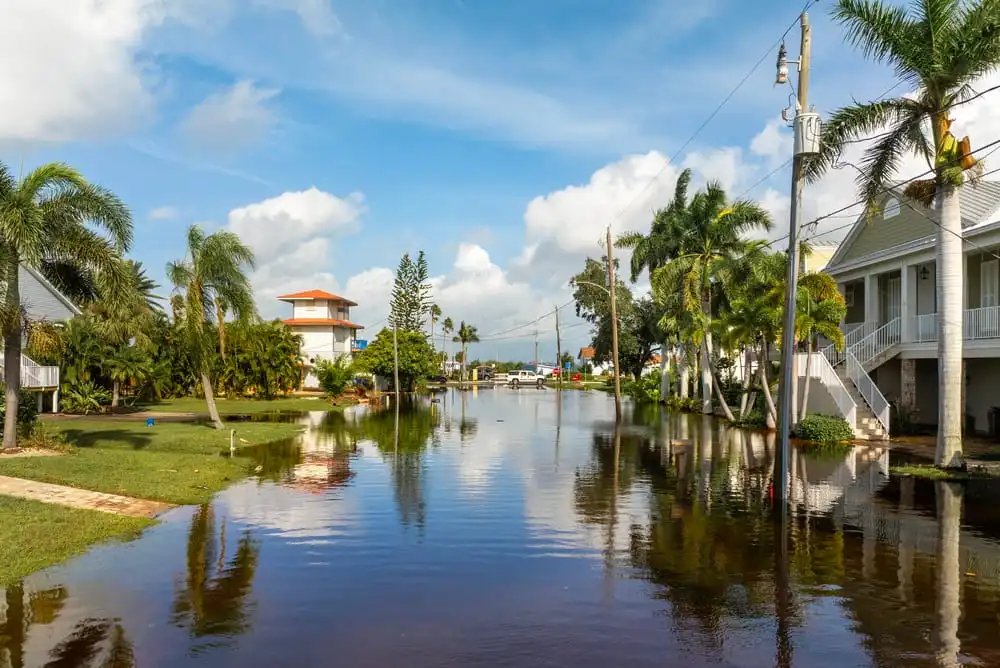
Do You Need Flood Insurance in the Charleston Area?
Many homeowners assume that if their property is not in a high-risk flood zone, they do not need flood insurance. This is one of the most common and potentially costly misconceptions in the Lowcountry.
FEMA designates flood zones using Flood Insurance Rate Maps (FIRMs). Properties in zones starting with A or V are considered high-risk and are generally required to carry flood insurance if they have a federally backed mortgage. But flooding does not respect zone boundaries. According to FEMA, more than 20 percent of flood insurance claims come from properties outside of high-risk flood zones. In a low-lying coastal market like Charleston, where heavy rain events, king tides, and tropical weather systems are common, the risk of water intrusion exists in neighborhoods across all three counties.
If you live in Goose Creek, Summerville, Moncks Corner, North Charleston, Mount Pleasant, James Island, West Ashley, Daniel Island, Hanahan, or anywhere in the coastal Lowcountry, your flood risk depends on your specific property's elevation, drainage, and proximity to waterways. Even if your lender does not require flood insurance, it may be worth considering. The average cost of flood insurance in the Charleston area varies based on your flood zone, elevation, and coverage limits, but for many homeowners the annual premium is significantly less than the cost of repairing even minor flood damage out of pocket. Premiums vary significantly based on multiple factors and are subject to carrier underwriting and FEMA rating methodologies. Flood insurance is typically the primary way to obtain financial protection for a peril that your homeowners policy generally excludes.
Homeowners in South Carolina are sometimes surprised to learn that flood insurance is not mandatory unless required by a lender, yet the financial exposure without it can be substantial. Even a few inches of water in a home can result in tens of thousands of dollars in damage to flooring, drywall, electrical systems, and personal belongings.
Not sure what flood zone your property is in or whether you need flood insurance in Goose Creek or the Charleston area? Request a quote or contact our office and our team can help you check your flood zone designation and explore your coverage options.
NFIP vs. Private Flood Insurance in South Carolina
Homeowners in the Lowcountry generally have two options when it comes to purchasing flood insurance: the National Flood Insurance Program (NFIP) or a private flood insurance carrier. Both have advantages and limitations, and the best fit depends on your property, your coverage needs, and what is available in your area. Understanding the difference between NFIP and private flood insurance is one of the most important steps in choosing the right policy for your Charleston or tri-county area home.
NFIP policies are backed by the federal government and are available to property owners in communities that participate in the NFIP, which includes the municipalities across the Charleston tri-county area. NFIP policies provide standardized coverage with maximum available limits of $250,000 for the dwelling and $100,000 for contents, subject to current program guidelines. NFIP policies generally do not include coverage for additional living expenses (the cost to live elsewhere while your home is being repaired), loss of use, or damage to detached structures like a separate garage or shed. NFIP premiums are set by FEMA and may be influenced by factors including your flood zone, your home's elevation, the age of your home, and the number of floors. Under FEMA's Risk Rating 2.0 methodology, premiums are now calculated on a property-by-property basis, which means your neighbor's NFIP premium may be different from yours even on the same street.
Private flood insurance policies are underwritten by individual insurance carriers. These policies may offer higher dwelling and contents limits than the NFIP, and some may include coverages that the NFIP typically does not offer, such as additional living expenses, replacement cost coverage on contents, or coverage for detached structures. Private flood carriers set their own pricing and underwriting criteria, which means premiums may be higher or lower than NFIP depending on the property and the carrier. In some cases, homeowners in lower-risk zones or with favorable elevation certificates may find more competitive pricing through a private carrier. Availability of private flood insurance varies by location and carrier.
As an independent insurance agency, we work with multiple carriers, including both NFIP and private flood options. That allows us to compare policies side by side and help you understand the trade-offs for your specific property in Goose Creek, Charleston, Summerville, or anywhere in the tri-county area. There is no one-size-fits-all answer, and the best choice often depends on your home's flood zone, elevation, value, and coverage priorities.
Key Differences Between Homeowners and Flood Insurance
Understanding where the two policies overlap and where they do not can help you avoid gaps in your coverage. Here are some of the most important distinctions to be aware of.
Cause of damage matters. Homeowners insurance generally may help cover water damage that originates inside the home, such as a burst pipe or a malfunctioning appliance. Flood insurance generally may help cover water damage that originates outside the home, such as storm surge, overflowing waterways, or heavy rain accumulation. If both types of water damage occur during the same event, you may need both policies to respond, subject to each policy's terms.
Wind vs. water in a hurricane. During a hurricane, wind damage and flood damage can happen simultaneously. Your homeowners or wind policy may help cover wind-driven damage to your roof, siding, or windows. Your flood policy may help cover damage caused by rising water or storm surge. Determining which damage was caused by wind and which was caused by water can sometimes be complex, and the distinction affects which policy responds to each portion of the claim.
Waiting periods. Flood insurance policies typically have a waiting period before coverage goes into effect. For NFIP policies, this is commonly 30 days from the date of purchase, although some exceptions may apply (such as when flood insurance is required in connection with a new mortgage). Private flood carriers may have different waiting period terms. This means you generally cannot buy a flood policy the day before a storm and expect it to cover damage from that event.
Coverage limits. NFIP flood policies currently have maximum available limits of $250,000 for the dwelling and $100,000 for contents, subject to program guidelines. Homeowners policies do not have a federally set cap, and coverage amounts are typically based on the estimated cost to rebuild your home. If your home is valued above the NFIP limits, you may want to explore private flood insurance for higher limits or an excess flood policy, depending on availability.
Contents coverage. Under the NFIP, personal property is generally covered on an actual cash value basis, meaning depreciation is factored in. Some homeowners policies and some private flood policies may offer replacement cost coverage on contents, which generally may help cover the cost to replace items at current prices without a deduction for depreciation. Coverage terms vary by policy.
For more on why homeowners premiums have been rising and strategies that may help lower your overall insurance costs, see: Why Homeowners Insurance Is So Expensive in South Carolina Right Now (And What You Can Do About It).
What About Sewer Backup and Water Damage Endorsements?
Another common source of confusion involves sewer backup coverage and water damage from sources other than flooding. Standard homeowners policies generally do not cover damage caused by water that backs up through sewers or drains. However, many carriers offer a sewer backup endorsement (sometimes called water backup coverage) that can be added to your homeowners policy for an additional premium. This endorsement generally may help cover damage caused by water that backs up through a sewer line, drain, or sump pump, subject to policy terms and limits.
Sewer backup is not the same as flooding. A sewer backup typically involves water coming up through your home's plumbing system, while flooding involves water entering from outside. If a heavy rainstorm overwhelms the municipal drainage system and causes water to back up through your drains, a sewer backup endorsement on your homeowners policy may help cover that damage. But if that same rainstorm causes floodwater to rise and enter your home through the doors or windows, that would generally be a flood claim, not a sewer backup claim. In some situations, determining whether water damage is classified as "flood" or "sewer backup" can depend on the source and sequence of events, and coverage determination is subject to policy definitions and adjuster evaluation.
If you do not already have a sewer backup endorsement on your homeowners policy, it is worth asking your agent about adding one. In a market like Charleston where heavy rain events are common, this is one of the more affordable endorsements that may help close a significant coverage gap.
In some cases, determining whether a loss is classified as flood or sewer backup depends on the source of water and policy definitions, and is subject to carrier claim determination.
Wind mitigation improvements may also help reduce your overall insurance costs. To learn about grant programs that may help fund those improvements, see our post on the SC Safe Home Program.
How to Get Flood Insurance in the Lowcountry
Purchasing flood insurance in the Charleston tri-county area is a straightforward process, but there are a few things to keep in mind.
Talk to your insurance agent. Both NFIP and private flood policies are sold through licensed insurance agents. You do not need to go through FEMA directly to buy an NFIP policy. At Cheri Nelson Insurance Agency, we can quote both NFIP and private flood options and help you compare coverage and pricing.
Know your flood zone. Your flood zone designation affects your premium, your coverage options, and whether your lender requires you to carry flood insurance. You can look up your property's flood zone on FEMA's flood map service at msc.fema.gov, or contact our office and we can help you check.
Plan ahead for the waiting period. Because flood policies commonly have a 30-day waiting period before coverage takes effect, it is important to purchase your policy well before hurricane season or any anticipated weather event. Do not wait until a storm is in the forecast.
Review your coverage annually. If you have made improvements to your home, if your home's value has changed, or if FEMA has updated the flood maps in your area, your coverage needs may have changed as well. An annual review with your agent can help make sure your limits and deductibles still make sense for your situation.
Ready to explore flood insurance options for your Lowcountry home? Call Cheri Nelson Insurance Agency at (843) 793-3168 or request a quote online to compare NFIP and private flood coverage.
Is Flood Insurance Required in South Carolina?
Whether flood insurance is required depends on your mortgage and your property's flood zone designation. If you have a federally backed mortgage (which includes most conventional, FHA, VA, and USDA loans) and your property is located in a FEMA-designated high-risk flood zone (zones A or V), your lender will generally require you to maintain flood insurance for the life of the loan.
If your property is in a moderate-risk or low-risk zone (zones B, C, or X), your lender typically will not require flood insurance. However, "not required" does not mean "not needed." As noted above, a significant percentage of flood claims come from properties outside high-risk zones. In a market like the Charleston Lowcountry, where elevation changes are subtle and drainage infrastructure can be overwhelmed during heavy rain events, voluntary flood coverage may be a smart financial decision even when it is not mandatory.
It is also worth noting that if FEMA updates the flood maps in your area and your property is reclassified into a higher-risk zone, your lender may require you to purchase flood insurance at that point. Buying a policy before a map change takes effect may allow you to lock in more favorable pricing in some cases, depending on the carrier and program.
What Flood Insurance Does Not Typically Cover
Just as it is important to understand what flood insurance may help cover, it is equally important to understand its common limitations. Flood insurance, whether through the NFIP or a private carrier, generally does not cover everything related to a flood event. Common exclusions or limitations may include:
Damage outside the insured building. Most flood policies generally do not cover damage to landscaping, septic systems, wells, fences, patios, decks, swimming pools, or other outdoor property. Coverage is typically focused on the structure and its contents.
Vehicles. Flood insurance does not cover damage to cars, trucks, or other motor vehicles. Flood damage to a vehicle is generally addressed through the comprehensive portion of an auto insurance policy, not through a flood or homeowners policy.
Temporary housing costs (NFIP). NFIP policies generally do not include coverage for additional living expenses. If your home is uninhabitable after a flood, the NFIP will not typically reimburse you for hotel stays, rental housing, or meals. Some private flood policies may include this coverage, so it is worth comparing options if this is a concern.
Mold and mildew. Flood policies may have specific terms regarding mold damage. In many cases, mold or mildew that could have been avoided by the homeowner may not be covered. Prompt action after a flood to dry out and clean the property is generally important both for health reasons and for supporting a claim.
Basement improvements. Under NFIP policies, coverage for finished basements is limited. Items like finished walls, flooring, and personal belongings stored in basements may have reduced coverage or may not be covered at all, depending on the policy terms.
Understanding these limitations can help you set realistic expectations and make informed decisions about supplemental coverage options. Your agent can walk you through the specific terms of any policy you are considering.
Frequently Asked Questions About Flood Insurance in the Lowcountry
Does homeowners insurance cover flooding in South Carolina?
No. Standard homeowners insurance policies in South Carolina generally do not cover damage caused by flooding. Flood damage, including storm surge, rising water, and surface water accumulation, typically requires a separate flood insurance policy. This applies regardless of whether you live in a designated high-risk flood zone.
Do I need flood insurance if I am not in a flood zone?
FEMA flood zone designations indicate relative risk levels, but flooding can occur anywhere. According to FEMA, more than 20 percent of flood insurance claims come from properties outside high-risk zones. If you live in the Lowcountry, where heavy rainfall, tidal flooding, and tropical weather are common, a flood policy may be worth considering even if your lender does not require one.
What is the difference between NFIP and private flood insurance?
NFIP policies are backed by the federal government and provide standardized coverage up to $250,000 for the dwelling and $100,000 for contents. Private flood insurance is offered by individual carriers and may offer higher limits, broader coverage, or different pricing. Availability and terms for private flood insurance vary by carrier and property location.
How much does flood insurance cost in Charleston, SC?
Flood insurance premiums in the Charleston area vary based on factors including your flood zone designation, your home's elevation, the age and construction of your home, and the coverage limits and deductible you choose. NFIP premiums are calculated by FEMA using the Risk Rating 2.0 methodology, which prices each property individually. Private flood premiums are set by individual carriers and may be higher or lower depending on the property. The average cost of flood insurance in Charleston and the Lowcountry varies widely, so the most effective way to find competitive pricing is to work with an independent agent who can compare both NFIP and private options for your specific property.
Is there a waiting period for flood insurance?
Yes. NFIP flood policies typically have a 30-day waiting period from the date of purchase before coverage goes into effect. Some exceptions may apply, such as when flood insurance is purchased in connection with a new mortgage. Private flood carriers may have different waiting period terms. It is best to purchase flood insurance well before hurricane season or any anticipated weather event.
Does flood insurance cover my personal belongings?
Yes, if you purchase contents coverage. NFIP policies offer up to $100,000 in personal property coverage, generally on an actual cash value basis. Some private flood policies may offer replacement cost coverage on contents. Contents coverage is optional and must be included in your policy, so make sure to discuss this with your agent.
What is sewer backup coverage and is it the same as flood insurance?
Sewer backup coverage is an endorsement that can be added to your homeowners policy. It generally may help cover damage caused by water that backs up through sewers, drains, or sump pumps. This is different from flood insurance, which is generally designed to address water that enters from outside the home. Both coverages address water damage, but they apply to different causes and are purchased through different policies.
Can I buy flood insurance from my homeowners insurance agent?
Yes. Both NFIP and private flood insurance policies are sold through licensed insurance agents. You do not need to go directly to FEMA to purchase an NFIP policy. At Cheri Nelson Insurance Agency, we can help you compare NFIP and private flood options for your property in the Charleston, Goose Creek, or tri-county area.
Make Sure Your Lowcountry Home Is Fully Protected
Living in the Lowcountry means living with water. From tidal creeks and marsh views to afternoon thunderstorms and hurricane season, water is part of daily life in Charleston, Berkeley, and Dorchester counties. Making sure you have the right combination of homeowners insurance and flood insurance is one of the most important financial decisions you can make as a homeowner in this market.
If you are not sure whether your current coverage includes flood protection, or if you want to compare NFIP and private flood options, we are here to help. As an independent agency with access to multiple carriers, we can review your current policies and help identify any gaps.
Call Cheri Nelson Insurance Agency at (843) 793-3168 or request a quote online to make sure your Lowcountry home is fully protected.
DISCLAIMER
The information in this article is provided for general educational purposes only and does not constitute insurance, legal, or financial advice. Coverage availability, terms, conditions, limits, and exclusions vary by policy, carrier, state, and individual underwriting. Policy descriptions are illustrative; actual coverage is governed by the policy contract. South Carolina insurance requirements and carrier practices are subject to change. No specific savings, premium reductions, or coverage outcomes are guaranteed. For guidance on your specific situation, please speak with a licensed agent at Cheri Nelson Insurance Agency.