

What Is Full Coverage Auto Insurance? A Charleston, SC Guide
Of all the auto insurance terms that confuse Charleston drivers, "full coverage" is probably the most misleading because it isn't actually an insurance term at all. There's no policy you can buy labeled "full coverage." No carrier writes a product with that name.
What people mean when they say full coverage is a policy that combines three separate coverages: liability, collision, and comprehensive. Whether that combination is right for you depends on your vehicle, your lender, your driving profile, and what risks you face on Lowcountry roads.
This guide breaks down what each piece does, why comprehensive coverage tends to matter more in coastal South Carolina than in most of the country, and how to think about whether full coverage fits your situation. Coverage terms, conditions, limits, and exclusions vary by policy and carrier, so use this as an educational framework and talk to a licensed agent about your specific needs.
"Full Coverage" Isn't a Policy — It's a Combination
Here's what's actually in a so-called full coverage policy:
Liability Coverage — designed to help address bodily injury and property damage you cause to others in an at-fault accident. This is the part South Carolina legally requires. Minimum limits in SC are 25/50/25 (we broke this down in detail in our Car Liability Insurance in Charleston guide).
Collision Coverage — designed to help with damage to your own vehicle from an impact, whether you hit another car, a utility pole, a guardrail, or are hit by another driver.
Comprehensive Coverage — designed to help with damage to your own vehicle from non-collision events: theft, vandalism, hail, wind, falling objects, flooding, animal strikes, and similar causes.
Liability is the only required piece in SC. Collision and comprehensive are optional unless your vehicle is financed or leased, in which case your lender typically requires both. That's why "full coverage" and "lender-required coverage" are often the same thing.
👉 Talk to a licensed Charleston agent →
Why Comprehensive Matters More in the Lowcountry
In most of the country, comprehensive coverage feels like a nice-to-have. In coastal South Carolina, it's often the most valuable coverage in your policy.
Think about the non-collision threats Charleston drivers face that drivers in most inland markets don't:
- Hurricane and tropical storm damage — wind-driven debris, storm surge, flooding during evacuation
- Hail — the Southeast gets hail events that can total a vehicle in minutes
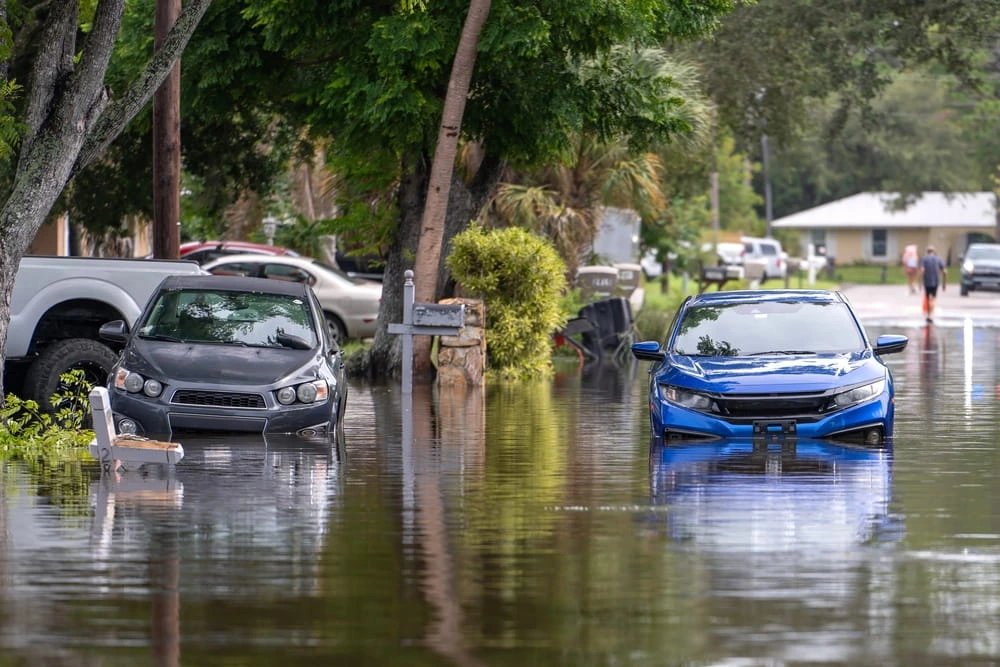
- Flooded intersections — a single drive through water deeper than you thought is one of the most common total-loss scenarios in the Lowcountry
- Falling oak limbs — Charleston's old-growth live oaks are beautiful, and occasionally lethal to a parked car
- Theft and vandalism — concentrated in downtown, tourist areas, and long-term parking
- Deer strikes — common on wooded routes around Summerville, Moncks Corner, and Awendaw
Comprehensive coverage is designed to help address damage from all of those. For a Lowcountry driver with a vehicle they can't afford to lose, comprehensive is usually a higher-value decision than collision.
👉 Request an auto quote with comprehensive coverage options →
When Collision Coverage Makes Sense
Collision is designed to help with repair costs when your vehicle is damaged in an impact whether you're at fault, the other driver is at fault, or no other driver is involved at all. That last scenario matters: if you hit a deer on Highway 17 or skid into a guardrail on I-26 during a storm, collision is the coverage that activates. Liability wouldn't apply (no third party to pay), and comprehensive typically wouldn't either (there's a collision involved).
Collision coverage is usually most worthwhile when:
- Your vehicle is financed or leased (lender almost always requires it)
- Your vehicle is newer or high-value
- You can't afford to replace the vehicle out of pocket
- You drive high-traffic corridors regularly (peninsula commuters, Mount Pleasant to downtown, I-26 commuters)
For an older paid-off vehicle worth a few thousand dollars, some drivers choose to drop collision. The math is straightforward: if your annual collision premium plus deductible approaches the vehicle's value, the coverage may not be worth it.
👉 Review your current policy with a local agent →
Liability: The Only Piece SC Legally Requires
Liability is the legally required floor, not a suggested level of protection. South Carolina requires:
- 25/50/25 Bodily Injury + Property Damage Liability ($25K per person, $50K per accident BI; $25K per accident PD)
- 25/50/25 Uninsured Motorist coverage (same limits, required in SC — not all states mandate this)
Most Charleston-area drivers benefit from limits meaningfully higher than the state minimum, commonly 100/300/100 or above, because modern medical bills and vehicle repair costs can exhaust minimum limits in a single serious accident. Liability limits are a separate decision from the full coverage question, but they matter more than almost any other choice on the policy.
For a deeper walkthrough, see our guide to car liability insurance in Charleston.
What Full Coverage Does NOT Address
"Full coverage" sounds like everything is handled. It isn't. Common gaps include:
- Normal wear and tear — brakes, tires, belts, general maintenance
- Mechanical breakdown — engine or transmission failure not caused by a covered event (separate mechanical breakdown coverage exists)
- Custom equipment beyond policy limits — aftermarket stereo, rims, lift kits often need scheduled add-ons
- Personal belongings stolen from the vehicle — usually handled by your homeowners or renters policy, not auto
- Ride-share driving — personal auto policies typically exclude ride-share activity; a ride-share endorsement or commercial policy may be needed
- Intentional damage or illegal activity
A quick review with a licensed agent can flag which of these gaps matter for your specific situation.
👉 Request a free coverage review →
Add-On Coverages Worth Considering in SC
Beyond the three core pieces, several add-ons come up regularly in conversations with Charleston clients:
- Uninsured/Underinsured Motorist (UM/UIM) — UM at 25/50/25 is already required in SC. UIM is a separate optional coverage that may help when the at-fault driver has some insurance but not enough. Worth considering given local traffic patterns.
- Medical Payments (MedPay) — designed to help with medical expenses for you and your passengers after an accident.
- Rental Reimbursement — designed to help cover a rental car while your vehicle is being repaired after a covered claim
- Roadside Assistance — towing, battery, tire, lockout help
- Gap Coverage — for financed vehicles, designed to help address the gap between what you owe on the loan and what the vehicle is worth if it's totaled
- Custom Equipment / Aftermarket Parts
Each of these is optional and priced separately. An independent agent can help you think through which ones fit your situation.

Do Charleston Drivers Actually Need Full Coverage?
There's no universal answer, but here are the scenarios where full coverage typically makes sense:
- Your vehicle is financed or leased — the lender almost always requires it
- Your vehicle is newer or higher-value — replacement cost is significant
- You can't easily replace the vehicle out of pocket
- You park outside during hurricane season — comprehensive alone may justify the cost
- You live in a high-hail or tree-heavy area (most of the Lowcountry qualifies)
- You drive long distances or high-traffic routes regularly
And where liability-only may be reasonable:
- Older, paid-off vehicle with low market value
- Minimal miles driven
- Garaged in a low-risk area
- You have the financial capacity to replace the vehicle out of pocket
There's no single right answer. It's a conversation worth having with a licensed agent who can look at your actual vehicle, your actual risk profile, and your actual budget.
What Drives Full Coverage Rates in Charleston
Full coverage premiums in the Lowcountry vary based on a mix of factors:
- Your ZIP code — downtown, peninsula, and coastal ZIPs can rate differently than inland Goose Creek or Moncks Corner
- Your driving record — tickets and at-fault accidents in SC affect rates for years
- Your vehicle — make, model, year, safety features, theft frequency data
- Your credit tier — insurance scoring is permitted in SC and influences premium
- Annual mileage and commute route
- Coverage limits and deductibles chosen
- Discount eligibility — multi-policy bundling, paid-in-full, paperless, telematics, affinity, good-student
The most effective way to find a competitive rate is to shop multiple carriers at once rather than getting locked into one quote. That's the case for working with an independent agency, we can quote several carriers for the same coverage package and let you compare apples to apples.
The Bottom Line
Full coverage isn't a product — it's shorthand for a policy that combines liability, collision, and comprehensive. For Charleston drivers, comprehensive is often the most valuable piece thanks to coastal weather, hail, flooding, and falling-oak exposure. Whether you need all three depends on the vehicle, the lender, and your financial situation.
If you're not sure whether your current policy has the right combination, that's exactly the kind of review a local independent agent can run with you. We'll look at what you're paying, what you're actually getting, and whether adjustments make sense.
👉 Get a fast auto quote → or call (843) 793-3168.
Frequently Asked Questions
What is full coverage auto insurance in South Carolina?
Full coverage is not a formal insurance product. It's shorthand for a policy that combines three separate coverages: liability (designed to help address damage you cause to others), collision (designed to help with damage to your own vehicle from an impact), and comprehensive (designed to help with non-collision damage like theft, hail, flooding, or falling objects). Only liability is legally required in South Carolina; collision and comprehensive are typically required by auto lenders on financed or leased vehicles.
Does full coverage auto insurance cover hail damage in the Lowcountry?
Hail damage is typically addressed by the comprehensive coverage portion of a full coverage policy, subject to your deductible and policy terms. Given how frequently coastal SC experiences hail and severe weather, comprehensive coverage is often one of the more valuable pieces for Charleston-area drivers. Specific coverage varies by policy.
Does full coverage cover a cracked or broken windshield?
Glass damage is generally addressed under comprehensive coverage, often subject to a separate glass deductible (some carriers offer a lower glass deductible or a glass waiver option). Terms vary by carrier and policy.
Does comprehensive cover flood damage during hurricane season?
Comprehensive coverage is typically designed to help with flood damage to your vehicle from storms, rising water, or hurricane-related events. This is separate from flood insurance on your home. Coverage terms and limits vary by policy.
Do I need full coverage if my car is paid off?
It depends on the value of the vehicle, your financial capacity to replace it out of pocket, and your risk exposure. If the annual premium for collision and comprehensive approaches the vehicle's replacement value, some drivers choose to drop those coverages. For Charleston drivers with vehicles parked outside during hurricane season, comprehensive may still be worth keeping even after the vehicle is paid off.
Is full coverage required by law in South Carolina?
No. South Carolina only legally requires liability coverage at 25/50/25 plus Uninsured Motorist coverage at 25/50/25. Collision and comprehensive are optional unless required by a lienholder on a financed or leased vehicle.
How is full coverage auto insurance priced in Charleston?
Full coverage premiums depend on your ZIP code, driving record, vehicle make and model, credit tier, chosen limits and deductibles, annual mileage, and available discounts. The most effective way to find a competitive rate is to shop multiple carriers at once, typically through an independent agency.
Review Your Full Coverage Policy with a Local Charleston Agent
Cheri Nelson Insurance Agency is an independent agency based in Goose Creek, serving drivers across Charleston, Mount Pleasant, Summerville, North Charleston, West Ashley, James Island, Daniel Island, Hanahan, Moncks Corner, Isle of Palms, Sullivan's Island, and Folly Beach since 2013. We quote multiple carriers side-by-side so you can compare real options — including carriers with a strong coastal SC appetite that don't advertise nationally.
📞 Call (843) 793-3168
🚗 Request a Quote - Have someone call you
⚡ Fast Quote - Fill Out Your Information & Agent Will Call You Same Day/Next Business day after 3pm - subject to line and UW approval
📍 205 N Goose Creek Blvd, Goose Creek, SC 29445
Disclaimer
*The information in this article is provided for general educational purposes only and does not constitute insurance, legal, or financial advice. Coverage availability, terms, conditions, limits, and exclusions vary by policy, carrier, state, and individual underwriting. Policy descriptions are illustrative; actual coverage is governed by the policy contract. South Carolina insurance requirements and carrier practices are subject to change. For guidance on your specific situation, please speak with a licensed agent at Cheri Nelson Insurance Agency.
---
About the Author: Cheri Nelson
Cheri Nelson is the founder of Cheri Nelson Insurance Agency, an independent agency serving Charleston, Goose Creek, and the greater Lowcountry since 2013. Cheri works with personal auto, home, flood, umbrella, and business insurance carriers to help South Carolina clients build coverage that reflects their real situation.