

Contractor Insurance Requirements in South Carolina: What You Need to Know (2026)
If you run a construction business in South Carolina, your insurance is not just a line item. It is tied directly to your ability to get licensed, pull permits, win bids, and stay on job sites. We work with trades businesses across the tri-county area every day, and one of the most common calls we get is from a sub who just lost a contract because their coverage did not meet the GC's requirements. That is not a hypothetical. It happens regularly in the Charleston market.
Whether you are a general contractor managing residential builds in Mount Pleasant, an electrician pulling permits in Goose Creek, a roofing crew working across Berkeley County, or a landscaping company servicing commercial properties in Summerville, the insurance you carry shapes how you operate. South Carolina's licensing system, administered through the SC Department of Labor, Licensing and Regulation (LLR), sets specific insurance thresholds that vary by license type, trade, and project value. On top of that, the general contractors and project owners you work with often set their own requirements that go well beyond what the state mandates.
This guide breaks down the types of coverage available to construction businesses in South Carolina, explains what the state may require, covers what this coverage typically costs, and walks through the real-world situations we see trades businesses and contracting companies run into in the Berkeley, Charleston, and Dorchester county area. As an independent agency, Cheri Nelson Insurance Agency works with multiple carriers to help construction firms find coverage that fits their trade, their contracts, and their budget.
This article is for general informational purposes only, and coverage may vary by carrier, policy, and individual underwriting. Always review your policy documents carefully and consult with a licensed agent for guidance on your specific needs.
This is a general overview and not a complete list of coverages, limitations, or exclusions.
Why This Coverage Matters for South Carolina Construction Businesses
Construction is one of the highest-risk industries for both liability claims and workplace injuries, and the Charleston market has its own dynamics that make coverage especially important. Here are some of the real-world situations we see regularly.
Certificate of insurance requests that reveal gaps. A subcontractor wins a bid on a commercial project in North Charleston, and the GC sends over insurance requirements: $1,000,000/$2,000,000 general liability limits, additional insured status, waiver of subrogation, and primary and non-contributory wording. The sub calls us because their current policy does not include half of those endorsements. Now they are scrambling to get coverage restructured before they lose the job. This scenario plays out constantly in the Charleston area, and it is almost always avoidable with the right policy structure from the start.
Completed operations claims that surface months later. A residential remodeling company finishes a bathroom renovation in Summerville. Eight months later, the homeowner discovers water damage behind the tile caused by improper waterproofing. The homeowner files a claim against the contractor. Without the completed operations portion of a general liability policy, that claim may not be covered, subject to policy terms. This is one of the most commonly misunderstood exposures in the construction industry.
Workers comp audits that catch underreported payroll. A framing crew reports estimated payroll at the beginning of the policy period, then has a busy year and hires additional workers. At the end-of-year audit, actual payroll is significantly higher than what was reported. The additional premium owed can be a painful surprise. We see this regularly with growing construction firms in the Lowcountry, and we always recommend reviewing payroll estimates with your agent mid-year if your business is scaling.
Uninsured subcontractor costs rolling uphill. When a sub does not carry their own workers compensation coverage, the GC's policy may be charged for those workers. That cost is then typically back-charged to the sub, often at a rate higher than what the sub would have paid for their own policy. We have seen this cost difference be significant enough to wipe out the sub's margin on a project.
These are not edge cases. They are the types of situations we help construction businesses in the tri-county area navigate on a regular basis. Working with a local independent agent who understands the Charleston construction market may help you avoid these scenarios before they cost you money or contracts.
For a broader overview of commercial coverage types available to all small businesses in the area, see our complete guide to small business insurance in Charleston, SC. You can also visit our business insurance service page for information on the commercial lines we offer.
Types of Coverage for Construction Businesses in South Carolina
The right insurance program for a contracting company is typically a combination of several coverage types, each addressing a different category of risk. What you need depends on your trade, your license classification, the size of your crew, the types of projects you take on, and the contractual requirements you need to meet. Below is a breakdown of each major coverage type and how it applies to trades businesses and construction firms in our area.
General Liability Insurance
General liability insurance. This is the coverage type that construction businesses need first, and it is the one that GCs and project owners ask about before anything else. A general liability policy may help cover claims involving third-party bodily injury, property damage, and personal injury arising from your operations, subject to policy terms, conditions, and limits.
For construction firms, the real-world exposures go beyond the textbook definition. If your crew accidentally damages a homeowner's existing structure during a renovation in West Ashley, a general liability claim may follow. If a passerby is injured by debris at your job site in North Charleston, that is another potential claim. And here is the one that catches a lot of contracting companies off guard: if a completed project causes property damage after you have left the site, the completed operations portion of your policy may need to respond, subject to policy terms. We commonly see this with water intrusion claims on remodeling projects, foundation issues on new construction, and faulty installation claims on HVAC and plumbing work across the Lowcountry.
General liability costs for construction businesses vary based on trade classification, annual revenue, the types of projects performed, claims history, coverage limits, and location. Higher-risk trades such as roofing, demolition, and excavation generally see higher premiums than trades like interior painting or finish carpentry. Premiums vary significantly based on multiple factors and are subject to carrier underwriting.
In the Charleston area, contracting companies are commonly required to carry minimum general liability limits of $1,000,000 per occurrence and $2,000,000 aggregate, though actual requirements vary by project and contract. Many GCs also require additional insured endorsements and, increasingly, primary and non-contributory wording on certificates of insurance. If you are regularly bidding on commercial work or larger residential projects, having these endorsements already built into your policy can save you time and prevent last-minute scrambles. Coverage limits, endorsement options, and associated costs vary by carrier and policy.
For construction businesses operating as an LLC, general liability works in conjunction with the liability protection the LLC structure provides. It is not a replacement for proper business formation, but it addresses the operational risks that your business structure alone does not cover.
Learn more about general liability insurance and how it applies to construction businesses, or read our detailed comparison of general liability vs. professional liability to understand whether your trade may also need errors and omissions coverage, which is increasingly relevant for design-build firms and construction management companies.
Workers Compensation Insurance
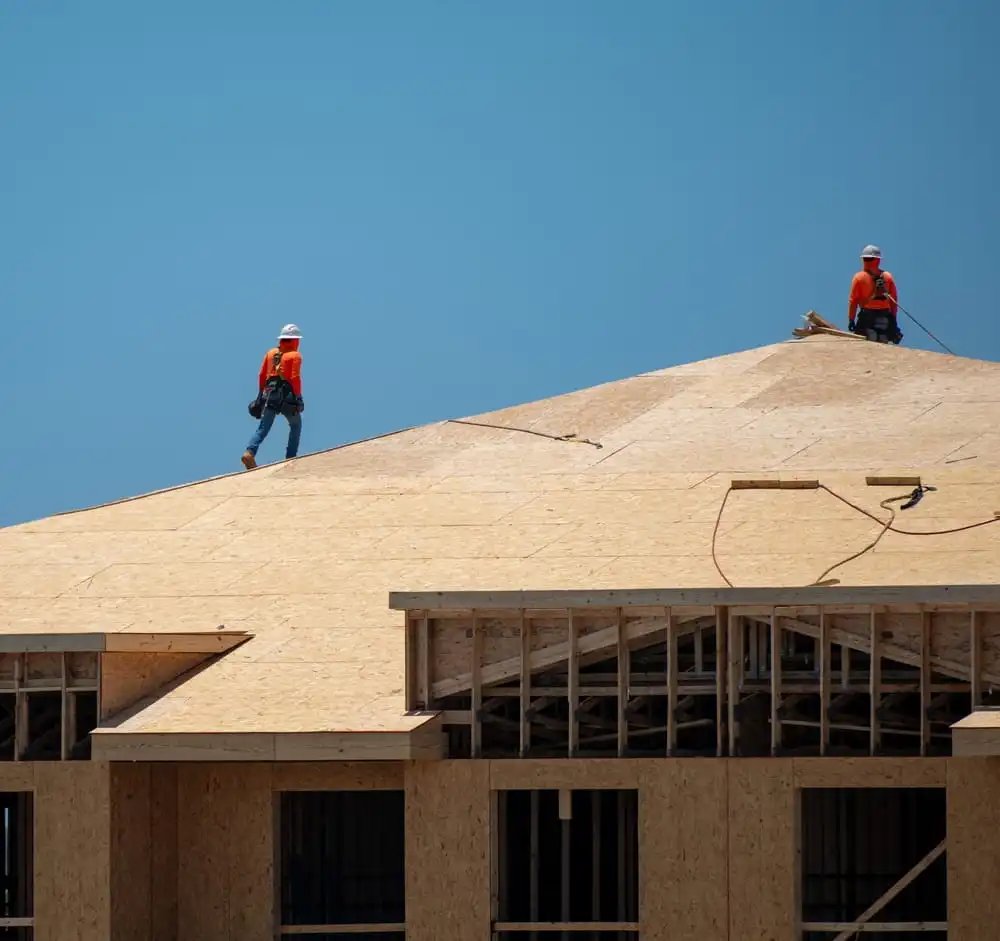
Workers compensation insurance. Construction consistently ranks among the most dangerous industries for workplace injuries in the United States. Falls from heights, electrocution, struck-by incidents, and caught-in/between hazards account for a significant percentage of construction fatalities and serious injuries nationwide.
South Carolina workers compensation requirements may vary based on employee count, ownership structure, industry classification, and current state guidelines. Contractors should verify current requirements with the SC Workers Compensation Commission or consult with a licensed legal professional. However, we can tell you from experience that the practical threshold for construction businesses is often different from the legal minimum. Many GCs in the Charleston area require subcontractors and trade partners to carry workers comp regardless of crew size before allowing anyone on site. If a sub does not carry their own policy, the GC's carrier may charge the GC for those uninsured workers, and that cost is often back-charged to the sub at a higher rate. We have seen this dynamic play out enough times that we generally recommend construction businesses carry workers comp even when they believe they fall below the state threshold.
Workers comp costs for construction firms depend on industry classification code, total payroll, crew size, and experience modification rate (EMR). Construction classification codes carry some of the highest rates per $100 of payroll in South Carolina, reflecting the elevated injury risk. A roofing operation will typically see significantly higher rates than an electrical or finish carpentry business. Premiums vary significantly based on multiple factors and are subject to carrier underwriting.
Your EMR is worth understanding because it is one of the few factors you can directly influence over time. An EMR above 1.0 means your claims history is worse than the average for your classification, which increases your premium. Below 1.0 means better than average, which reduces it. We work with construction firms in the Lowcountry that have invested in safety programs, toolbox talks, and return-to-work protocols specifically to drive their EMR down, and the premium savings over two to three years can be substantial, though actual results vary by business and carrier.
Some GCs and project owners in the Charleston area also require a waiver of subrogation endorsement on your workers comp policy. We commonly see this in commercial construction contracts and larger residential projects. This endorsement is typically available through your carrier, subject to availability and policy terms.
For a deeper look at workers compensation across all industries in South Carolina, read our detailed guide to workers comp for small businesses in SC. You can also visit the SC Workers Compensation Commission or the SC Department of Labor, Licensing and Regulation for current state guidelines.
Commercial Auto Insurance
Commercial auto insurance. If your construction business owns, leases, or regularly uses vehicles to transport workers, tools, materials, or equipment to job sites, commercial auto insurance is generally necessary. Personal auto policies typically do not extend adequate coverage to vehicles used primarily for business purposes, and relying on personal coverage for work trucks, vans, or trailers may leave significant gaps, subject to policy definitions and carrier guidelines.
For trades businesses that operate heavy trucks, dump trucks, or vehicles that tow trailers and equipment, appropriate coverage limits and vehicle classifications are especially important. A contractor truck hauling a skid steer to a site in Moncks Corner is a very different risk profile than a painter driving a sedan to a job in Daniel Island, and the coverage should reflect that.
If employees use their personal vehicles to travel to job sites or pick up materials, a hired and non-owned auto endorsement may help cover liability claims arising from the business use of those vehicles, subject to policy terms. Commercial auto costs depend on the number and type of vehicles, driver records, annual mileage, vehicle weight class, and coverage limits. Premiums vary significantly based on multiple factors and are subject to carrier underwriting. South Carolina requires minimum liability limits for all registered vehicles, but construction contracts commonly require limits well above the state minimum.
Builders Risk Insurance
Builders risk insurance. If your business is involved in new construction, major renovations, or building projects, builders risk insurance may help cover the structure and materials during the construction process against covered perils such as fire, theft, vandalism, and certain weather events, subject to policy terms and exclusions.
This coverage is typically written for a specific project and time period, starting when construction begins and ending when the project is completed or the building is occupied. In the Charleston and Summerville construction markets, builders risk is commonly required by lenders, developers, and project owners. Whether the contractor or the property owner carries the policy depends on the contract terms, and we see it structured both ways in the Lowcountry market.
One issue we see regularly with builders risk in the tri-county area involves weather-related coverage. Standard builders risk policies may not include flood or named storm coverage, and given the Lowcountry's coastal exposure, this can be a significant gap if the project is in a flood zone or a wind-exposed area. Understanding what perils your builders risk policy does and does not include is important, as defined in the policy and subject to policy terms. Builders risk costs depend on total project value, construction timeline, location, construction type, and coverage limits. Premiums vary significantly based on multiple factors and are subject to carrier underwriting.
Inland Marine Insurance for Contractors
Inland marine insurance. Construction businesses regularly move expensive tools, equipment, and materials between job sites, shops, and storage locations. Standard commercial property policies may not adequately cover items that are regularly transported or used away from your primary business premises, subject to policy definitions. Inland marine insurance may help fill that gap.
We commonly work with contracting companies and trades businesses in the tri-county area that have significant investments in specialty tools, welding equipment, generators, compressors, and laser levels. A stolen trailer full of tools at a job site in North Charleston is not just a property loss. It is lost productivity, missed deadlines, and potential contract penalties. Inland marine costs depend on the total value of equipment being covered, the types of tools and property included, and coverage limits. Premiums vary significantly based on multiple factors and are subject to carrier underwriting.
Commercial Umbrella Insurance for Contractors
Commercial umbrella insurance. Given the elevated liability exposure that comes with construction work, many contracting companies carry a commercial umbrella policy that provides an additional layer of coverage above and beyond the limits of their underlying general liability, commercial auto, and employers liability policies, subject to policy terms.
Umbrella coverage is frequently required by GCs, project owners, and government entities on larger projects in the Charleston area. If your contract requires $2,000,000 or more in total liability coverage but your general liability policy carries a $1,000,000 per occurrence limit, an umbrella can help bridge that gap, subject to policy terms. We commonly see umbrella requirements on commercial builds, multi-family residential projects, and government contracts across the tri-county area. Umbrella costs for construction firms are often more affordable than expected relative to the additional coverage provided. Premiums vary significantly based on multiple factors and are subject to carrier underwriting.
Contractor Bonds vs. Insurance
Surety bonds. One of the most common points of confusion we see with construction businesses is the difference between a bond and an insurance policy. They serve different purposes.
A surety bond is a guarantee to the project owner that you will complete the work according to the contract terms. If you fail to perform, the bond may compensate the project owner, and you are then responsible for repaying the bonding company. Insurance, on the other hand, is designed to protect your business against claims and losses. You need both, and one does not replace the other.
South Carolina may require certain contractor classifications to carry surety bonds as a condition of licensure, separate from any insurance requirements. Bond types and amounts depend on your license classification and the scope of work. You can verify current bonding requirements through LLR.
Need help figuring out what coverage your contracting business may need?Request a free quote or contact us to speak with a licensed agent who works with contractors across the tri-county area every day.
South Carolina Contractor License Insurance Requirements
South Carolina's contractor licensing system is administered by LLR through multiple boards depending on your trade and scope of work. Understanding what the state requires for your specific license classification is important for both initial licensure and ongoing compliance.
Licensing and insurance requirements may change and should be verified directly with the applicable licensing board. The information below is general in nature and may not reflect current requirements for your specific classification.
General and Mechanical Contractor Requirements
The SC Contractors' Licensing Board oversees general contractors and mechanical contractors (HVAC, plumbing, electrical). Insurance requirements generally vary by license group and the dollar value of projects you are authorized to perform. Larger license classifications that allow higher-value projects generally require higher insurance limits, subject to current board requirements.
Requirements may include general liability, workers compensation (subject to current state thresholds and guidelines), and surety bonds, depending on your specific license group. The minimum limits and bond amounts are set by the licensing board and are subject to change. We work with contractors across all license groups in the Charleston area and can help you understand what your specific classification may require.
Residential Builder and Specialty Contractor Requirements
Residential builders and residential specialty contractors are licensed through the SC Residential Builders Commission. Insurance requirements for residential construction businesses may include general liability and, in some cases, surety bonds or other financial assurance, subject to current commission requirements and the scope of work authorized under your license.
Specialty trades such as roofing, electrical, plumbing, HVAC, and fire protection may have additional or different requirements depending on the licensing board that oversees your trade. If you are an electrician in Goose Creek, a plumber in Summerville, or an HVAC company in Moncks Corner, the requirements for your license may differ from those of a general contractor. Always verify with the relevant licensing board.
Subcontractor Insurance Requirements
Even if the state does not require certain coverages based on your license type, the GCs you work for will almost certainly have their own requirements. In the Charleston market, subcontractor insurance requirements commonly include general liability with minimum limits, workers compensation coverage, and the ability to provide certificates of insurance with additional insured endorsements.
Here is the practical reality we see in the field: if you cannot produce a compliant certificate of insurance, you are not getting on the job site. For subcontractors and trade partners looking to win bids and maintain relationships with general contractors across the tri-county area, carrying adequate coverage is as much a business necessity as it is a regulatory one. We have worked with trades businesses that invested in proper coverage and immediately opened up bidding opportunities they had been excluded from.
How Much Does Contractor Insurance Cost in South Carolina?
Insurance costs for construction businesses are one of the most common questions we hear, and the honest answer is that it depends heavily on your specific trade, crew size, and the types of projects you take on. Premiums vary significantly based on multiple factors and are subject to carrier underwriting. Here is a general sense of how the major coverage types break down.
General liability costs. Your trade classification is the biggest driver. A roofing company is going to see higher premiums than an interior finish-out operation because the risk profile is fundamentally different. Revenue, claims history, and coverage limits also play a significant role. We work with construction businesses across a wide range of trades, and the pricing variation between classifications can be substantial. Actual costs depend on your specific risk profile and carrier.
Workers compensation costs. Calculated based on classification code and total payroll. Construction codes carry some of the highest rates in the state. Your EMR is the lever you can pull. One of the most effective things we see construction firms do is invest in safety programs and return-to-work protocols that drive their EMR down over a two-to-three-year period. The premium impact can be meaningful, though actual results vary by business and carrier.
Builders risk costs. Driven by total project value, construction type, location, and timeline. Coastal projects in the Lowcountry often carry higher premiums due to hurricane and wind exposure. We commonly see this with beachfront and waterfront projects on the islands and in Mount Pleasant.
Commercial auto costs. Depend on fleet size, vehicle types, driver records, and weight class. A contractor running three pickup trucks has a very different premium than one operating dump trucks and flatbeds.
Many carriers offer multi-policy discounts when you bundle coverages together. Packaging general liability, commercial auto, and workers comp with the same carrier, or combining coverages into a contractor-specific package where eligible, may help reduce overall costs. Discount availability and amounts vary by carrier.
The most effective way to understand your specific costs is to request a quote from an independent agency that can compare options from multiple carriers. We work with carriers that specialize in construction and trades business coverage and can help you find competitive pricing for your specific operation.
Choosing the Right Contractor Insurance for Your Business
Selecting the right insurance program starts with understanding both your regulatory requirements and the contractual realities of the Charleston construction market. Here are some considerations based on what we see working with trades businesses and contracting companies across the area.
Know your license requirements. Before purchasing coverage, verify what insurance your specific contractor license requires through LLR or the relevant licensing board. Your license classification, the dollar value of projects you are authorized to perform, and your trade all influence what you need.
Read your contracts before you sign them. This sounds obvious, but we regularly work with subs who sign a contract and then discover the insurance requirements they agreed to. GCs, developers, and commercial property managers each have their own specifications. Review those requirements with your agent before you commit so you know what your coverage needs to include and what it will cost.
Build your policy for your toughest contract, not your easiest one. If you regularly bid on commercial work or larger residential projects that require primary and non-contributory wording, additional insured endorsements, and waiver of subrogation, build those into your base policy. It is generally less expensive and less disruptive than adding endorsements on a per-project basis every time a new COI request comes in.
Plan for certificate of insurance turnaround. In a competitive market like Charleston, delays in providing certificates can cost you jobs. Make sure your agent can issue COIs quickly and that your policies already include the endorsements your contracts commonly require.
Review your coverage when your business changes. As your construction firm grows, your revenue increases, your payroll changes, and the scope of your projects evolves, your coverage needs to keep pace. We recommend a mid-year check-in in addition to your renewal review, especially for growing operations that are adding crew members or taking on larger projects.
Work with an independent agent. An independent agency has access to multiple carriers and can compare options, pricing, and policy features on your behalf. The right coverage depends on your specific trade, risk profile, and the contracts you need to meet. At Cheri Nelson Insurance Agency, we help construction businesses, trades operations, and contracting companies across Goose Creek, Charleston, Summerville, North Charleston, Moncks Corner, Mount Pleasant, Hanahan, and the surrounding area. Visit our insurance companies page to see some of the carriers we work with.
Frequently Asked Questions About Contractor Insurance in South Carolina
What insurance does a construction business need in South Carolina?
The types of coverage a construction business may need generally depend on the license classification, trade, crew size, and the types of projects performed. Common coverages include general liability, workers compensation, commercial auto, builders risk, inland marine, professional liability and commercial umbrella. Specific requirements are set by the relevant licensing board and may also be dictated by the contracts and subcontracts you sign. Requirements may change, so always verify with the applicable licensing board. A licensed agent can help you evaluate your specific needs based on your trade and operations.
Is general liability insurance required for contractors in SC?
South Carolina may require general liability as a condition of licensure for certain contractor classifications, subject to current licensing board requirements. Even where state law does not mandate it, many GCs, project owners, and commercial clients in the Charleston area require proof of general liability before allowing a construction business on site. In practice, it is generally considered essential for operating in the construction industry regardless of whether it is legally required for your specific license type.
Do construction businesses need workers comp in South Carolina?
South Carolina workers compensation requirements may vary based on employee count, ownership structure, industry classification, and current state guidelines. Contractors should verify current requirements with the SC Workers Compensation Commission or consult with a licensed legal professional. In practice, many GCs in the Charleston area require their subcontractors and trade partners to carry workers comp regardless of crew size. If a sub does not carry their own policy, the GC's carrier may charge for those uninsured workers, and that cost is often back-charged at a higher rate than the sub would have paid for their own coverage.
How much does contractor insurance cost in South Carolina?
Costs vary significantly based on trade classification, annual revenue, crew size, payroll, claims history, the types of projects performed, and the coverage types, limits, and deductibles selected. Higher-risk trades such as roofing and demolition generally see higher premiums than lower-risk trades such as painting and finish carpentry. The most effective way to understand your specific cost is to request a quote from an independent agency that can compare options from multiple carriers.
What is builders risk insurance and do contractors need it?
Builders risk insurance may help cover a building and materials during the construction process against covered perils such as fire, theft, and certain weather events, subject to policy terms. It is typically written for a specific project and time period. Builders risk is commonly required by lenders, developers, and project owners in the Charleston and Summerville markets. Whether the contractor or the property owner carries the policy depends on the contract terms. It is important to understand whether flood and named storm coverage are included, as standard policies may not cover these perils in the Lowcountry, as defined in the policy and subject to policy terms. Visit our builders risk insurance page for more details.
What is the difference between a contractor bond and contractor insurance?
A surety bond is a guarantee to the project owner that you will complete the work according to the contract. If you fail to perform, the bond may compensate the project owner, and you are then responsible for repaying the bonding company. Insurance is designed to protect your business against claims and losses such as third-party injuries, property damage, and workplace injuries. South Carolina may require certain contractor classifications to carry both bonds and insurance, subject to current licensing board requirements.
Do subcontractors need their own insurance in South Carolina?
While state requirements depend on your license type and current guidelines, many GCs in the Charleston area require subcontractors and trade partners to carry their own general liability and workers compensation coverage, provide certificates of insurance, and name the GC as an additional insured. Subs who do not carry their own coverage may lose bids, be excluded from job sites, or have coverage costs back-charged through the GC's policy at a higher rate. We have worked with trades businesses that saw immediate improvement in their bidding opportunities after getting properly set up with compliant coverage.
How do I get a contractor insurance quote in the Charleston area?
You can request a free quote online or call Cheri Nelson Insurance Agency at (843) 793-3168. As an independent agency based in Goose Creek, SC, we work with multiple carriers that write coverage for construction firms, trades businesses, and contracting companies across a range of trades. Whether you need a general liability quote, workers comp quote, builders risk quote, or a full commercial package, our team can walk you through the options. You can also visit our office at 205 N. Goose Creek Blvd., Suite 106, or reach us through our contact page.
Protect your construction business with the right coverage. Call Cheri Nelson Insurance Agency today at (843) 793-3168 or request a free quote online. Our team works with trades businesses and contracting companies across the tri-county area every day and can help you find coverage that fits your trade, your contracts, and your budget.
The information in this article is provided for general educational purposes only and does not constitute insurance, legal, or financial advice. Coverage availability, terms, conditions, limits, and exclusions vary by policy, carrier, state, and individual underwriting. Policy descriptions are illustrative; actual coverage is governed by the policy contract. South Carolina insurance requirements and carrier practices are subject to change. No specific savings, premium reductions, or coverage outcomes are guaranteed. For guidance on your specific situation, please speak with a licensed agent at Cheri Nelson Insurance Agency.